

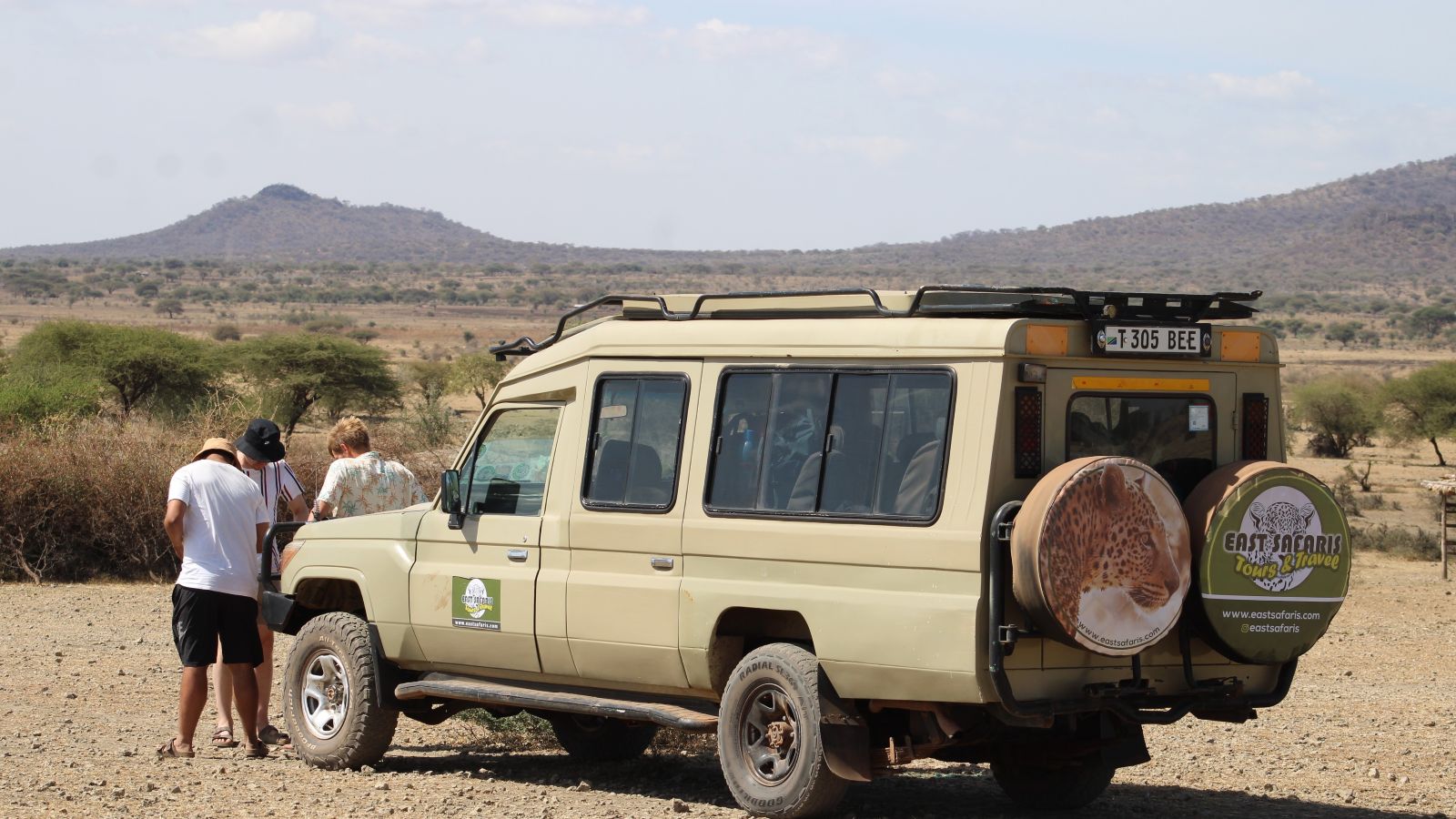
Everything You Need to Know Before Your Safari with East Safaris
A safari in Tanzania is an unforgettable experience. From watching elephants cross the road in Tarangire to following lions across the Serengeti plains, every day brings something different.
If this is your first safari, you may also have a few practical questions: What should I pack? How much cash should I carry? Do I need to tip my guide? Will I have Wi-Fi? What are safari vehicles and roads really like?
We have put together this guide to help you arrive prepared, relaxed, and ready to enjoy your safari.
Before You Travel
Before leaving home, we recommend checking a few important things.
Passport and visa
Make sure your passport is valid for your journey and that you have the appropriate visa or entry permission for Tanzania.
We recommend arranging your visa before travelling whenever possible and keeping a digital and printed copy of your travel documents.
Tip: Save copies of your passport, visa, travel insurance, flight details and safari itinerary on your phone and keep another copy separately from your original documents.
Travel insurance
Travel insurance is strongly recommended for every safari.
Your policy should ideally include medical treatment, emergency assistance, trip cancellation or interruption, baggage protection, and emergency evacuation where appropriate.
A safari takes you into remote areas, so having appropriate travel insurance provides valuable peace of mind.
Money, Cash and Credit Cards
Tanzania uses the Tanzanian Shilling (TZS), although US dollars are widely used in the tourism industry.
Visa and Mastercard are accepted at many hotels, lodges and established businesses. However, card payments can be less reliable in remote safari areas because of connectivity or payment-terminal limitations.
For this reason, we recommend carrying some cash even if you plan to use your cards for most expenses.
We recommend:
- Carrying some US dollars in cash
- Bringing smaller denominations such as $5, $10 and $20 notes, especially for tips and small purchases
- Carrying a Visa or Mastercard as a backup
- Informing your bank that you will be travelling internationally
- Keeping some emergency cash separately from your main wallet
American Express may have more limited acceptance than Visa and Mastercard, particularly outside major hotels and tourist establishments.
What about old US dollar notes?
For convenience, we recommend travelling with newer, clean US dollar notes.
Some businesses may be reluctant to accept old, damaged, torn or heavily marked notes. Keeping your notes in good condition can help avoid unnecessary problems during your trip.
Safari Tipping Guide
Tipping is not compulsory, but it is a customary way to show appreciation for excellent service.
Your safari guide plays an important role in your experience. They are not only your driver, but also your wildlife expert, naturalist, interpreter and often the person who turns an ordinary game drive into a memorable experience.
Suggested safari tipping guideline
| Service | Suggested amount |
|---|---|
| Safari guide/driver | US$15-$25 per person per day |
| Exceptional guide service | US$25-$35+ per person per day |
| Camp/lodge staff | US$10-$15 per person per day through a communal tip box |
| Porter | US$1-$2 per bag/service |
| Transfer driver | US$5-$10 per transfer |
| Special activity guide | US$10-$20 per person, depending on the activity |
These are guidelines rather than fixed charges. You should always feel comfortable tipping according to the quality of service you received and what you feel is appropriate.
How should I tip my safari guide?
For a private safari, many guests prefer to give the guide their tip directly at the end of the safari.
For lodge or camp staff, a communal tip box is often available. This allows gratuities to be shared among the wider team, including people working behind the scenes.
You do not need to tip every person you meet.
What Should I Pack for a Tanzania Safari?
The best safari wardrobe is comfortable, lightweight and practical.
You do not need expensive safari clothing or to dress like an explorer from a movie.
Clothing
We recommend:
- Lightweight trousers or comfortable safari pants
- T-shirts and lightweight shirts
- Long-sleeved shirts for sun and insect protection
- A light fleece or sweater
- A lightweight jacket
- Comfortable walking shoes
- Sandals
- Hat or cap
- Sunglasses
- Lightweight rain jacket
- Neutral or earth-tone clothing
Why neutral colours?
Neutral colours such as beige, khaki, brown and green are practical for safari because they blend naturally with the environment and are less likely to show dust.
There is no requirement to wear safari colours, however. Comfort is more important.
Personal items
Remember to pack:
- Sunscreen
- Insect repellent
- Personal medication
- Lip balm
- Hand sanitizer
- Reusable water bottle
- Small personal first-aid kit
- Toiletries
- Camera or smartphone
- Extra batteries
- Power bank
- Binoculars, if you have them
Travelling With Luggage
If your safari is entirely by road, you generally have more flexibility with luggage.
However, if your itinerary includes domestic bush flights, luggage restrictions can be much stricter.
Safari aircraft have limited luggage capacity, and soft-sided bags are normally preferred.
Your specific airline and itinerary will determine the applicable baggage allowance, so please check this before travelling.
Our advice
If you are flying between safari destinations:
Pack light and use soft-sided luggage whenever possible.
Avoid large hard-shell suitcases unless your flight arrangements specifically allow them.
If you need assistance with luggage storage, speak with our team before your safari.
What Is a Safari Vehicle Really Like?
Our safari vehicles are designed for wildlife viewing and long days in the bush rather than for luxury road travel.
You should expect:
- Bumpy and sometimes dusty roads
- Open landscapes and changing temperatures
- Long game drives
- Frequent stops to watch wildlife
- Plenty of time looking through the vehicle’s open roof
- Occasional rough sections of road
The roads inside national parks are not paved highways. The occasional bump is part of the safari experience.
And yes, your vehicle will probably get dusty.
That is completely normal.
Safari Mornings Can Be Early
Some of the best wildlife activity happens in the early morning.
Depending on your itinerary and the wildlife experience we are targeting, your guide may recommend an early departure.
You may find yourself leaving camp shortly after sunrise, sometimes with a packed breakfast.
It can be tempting to stay in bed, but those early hours can bring some of the most memorable moments of your safari.
Wildlife Sightings Cannot Be Guaranteed
This is one of the most important things to understand before your safari.
Wild animals are wild.
Your guide has extensive knowledge of animal behaviour and the best places to look, but no responsible safari company can guarantee that you will see a particular animal at a particular time.
You may spend an hour looking for a lion and then suddenly find yourself watching a leopard, elephant herd or cheetah instead.
The unpredictability is part of what makes a safari special.
What about the Great Migration?
The Great Wildebeest Migration follows seasonal patterns, but the animals are constantly moving.
River crossings are particularly unpredictable. We can take you to the right area during the appropriate season and use our local knowledge to maximize your chances, but a river crossing can never be guaranteed on a specific day or at a specific location.
The same principle applies to calving, predator activity and other wildlife events.
Safari Etiquette
A safari is a shared experience between people and wildlife.
To protect the animals and help everyone enjoy their experience, please follow your guide’s instructions.
Please remember:
- Never feed wild animals
- Do not shout or make unnecessary noise
- Do not try to attract animals to the vehicle
- Do not ask your driver to chase wildlife
- Stay inside the vehicle unless your guide tells you it is safe to exit
- Respect other safari vehicles
- Do not litter
- Avoid playing loud music
- Keep your voice low when near wildlife
- Follow all national park regulations
Your guide is there to keep you safe and to protect the wildlife experience for everyone.
Photography Tips
You do not need professional photography equipment to enjoy a safari.
A smartphone can capture wonderful memories, especially when the animal is relatively close.
If you have a camera with a zoom lens, however, you will have more flexibility when photographing wildlife at a distance.
Useful items for photographers:
- Camera
- Zoom lens
- Extra batteries
- Extra memory cards
- Power bank
- Lens cleaning cloth
- Binoculars
Keep your camera ready.
Wildlife can appear without warning, and sometimes the most memorable moment lasts only a few seconds.
Can I Use My Phone and Wi-Fi?
Connectivity varies considerably during a Tanzania safari.
Some lodges and camps provide Wi-Fi, while others have limited connectivity or none at all.
Mobile network coverage also varies depending on where you are.
We recommend:
- Downloading important documents before leaving town
- Saving your itinerary offline
- Carrying a power bank
- Letting family or friends know that there may be periods when you are difficult to reach
A few days with limited connectivity can actually become one of the most enjoyable parts of your safari.
Instead of constantly checking your phone, you can concentrate on the elephant herd outside your vehicle.
Electricity and Charging
Most established lodges and camps provide charging facilities, but electricity arrangements can differ between properties.
Some remote camps operate using solar power or generators and may have limited charging hours.
We recommend bringing:
- A power bank
- Your phone charger
- Camera batteries and charger
- Appropriate travel adapters
Tanzania generally uses Type G electrical sockets, although some properties may provide adapters.
What About Drones?
Please do not assume that you can bring a drone and fly it over national parks.
Drone operations in Tanzania’s protected areas are subject to regulations and authorization requirements.
If you are interested in bringing a drone, please contact us before your trip so we can advise you on the applicable requirements.
Food and Drinking Water
Meals are normally included according to the meal plan specified in your safari itinerary.
Safari lodges and camps cater to a wide range of dietary preferences and requirements.
If you have a food allergy, special dietary requirement or medical restriction, please tell us before your safari so we can communicate this to the relevant properties.
We also provide drinking water during safari according to your itinerary.
We encourage guests to carry a reusable water bottle.
What Should I Expect From Safari Lodges and Camps?
Accommodation in Tanzania ranges from comfortable lodges to luxury tented camps and high-end safari lodges.
Even luxury camps are located in natural environments, so the experience can be different from staying in a city hotel.
You may hear:
- Birds
- Insects
- Frogs
- Wind
- Nearby wildlife
This is part of being in the African wilderness.
At some properties, your room or tent may also be surrounded by natural vegetation rather than conventional hotel grounds.
Enjoy it. These sounds are part of the experience.
Laundry
Laundry services are available at many safari lodges and camps, although availability and prices vary.
Because safari clothing is generally lightweight and easy to wash, you do not need to bring a different outfit for every day.
Packing less makes travelling between destinations easier, especially when your itinerary includes bush flights.
Health and Personal Medication
Bring enough of your regular medication for the entire trip, preferably with a little extra in case of unexpected delays.
Keep important medication in your hand luggage rather than your checked luggage.
Before travelling, consult an appropriate travel-health professional regarding vaccinations, malaria prevention and other health considerations relevant to your personal circumstances and itinerary.
If you have specific medical or dietary requirements, please tell your East Safaris travel consultant in advance.
Respecting Local Communities
Tanzania is home to diverse communities and cultures, each with its own traditions and way of life.
When visiting villages or meeting local communities:
- Ask before taking photographs of people
- Dress respectfully
- Listen to your guide
- Avoid giving money or gifts directly to children
- Purchase crafts and products through appropriate channels
- Be respectful of local customs
Cultural experiences are most meaningful when they are based on genuine interaction and mutual respect.
What Is Usually Included in Your Safari?
Your exact inclusions depend on the safari you have booked.
Depending on your package, your safari may include:
- Accommodation
- Meals
- Private safari vehicle
- Professional safari guide
- National park and conservation fees
- Game drives
- Airport transfers
- Drinking water
- Selected activities
Common personal expenses
These may not be included unless specifically stated in your itinerary:
- International flights
- Visa
- Travel insurance
- Tips
- Alcoholic drinks
- Laundry
- Souvenirs
- Personal purchases
- Optional activities
- Certain beverages
- Other services not specifically listed in your itinerary
Always check your individual safari quotation for the exact inclusions and exclusions.
Your Safari Packing Checklist
Before leaving home, use this quick checklist.
Documents
☐ Passport
☐ Tanzania visa/entry authorization
☐ Travel insurance
☐ Flight details
☐ Safari itinerary
☐ Accommodation confirmations
☐ Emergency contact details
Money
☐ US dollars in cash
☐ Visa/Mastercard
☐ Bank notified of international travel
Clothing
☐ Lightweight trousers
☐ T-shirts
☐ Long-sleeved shirts
☐ Light jacket/fleece
☐ Comfortable shoes
☐ Sandals
☐ Hat
☐ Sunglasses
☐ Rain jacket
Health & comfort
☐ Personal medication
☐ Sunscreen
☐ Insect repellent
☐ Toiletries
☐ Hand sanitizer
☐ Reusable water bottle
Electronics
☐ Phone
☐ Camera
☐ Chargers
☐ Power bank
☐ Extra batteries
☐ Memory cards
☐ Travel adapter
Safari extras
☐ Binoculars
☐ Small day bag
☐ Soft-sided luggage if flying
☐ Small cash for tips and personal expenses
Our Final Advice
Don’t try to pack your entire home into your suitcase.
Bring what you need, leave some room for souvenirs, and come prepared for changing weather, dusty roads, early mornings and plenty of time outdoors.
Most importantly, come with an open mind.
Your safari will not always happen exactly as you imagined it. The animals may surprise you, the weather may change, and plans may sometimes need to adapt to conditions in the wilderness.
That is part of the adventure.
One morning you may be watching a herd of elephants. The next, you could be following wildebeest across the Serengeti. You may spend hours searching for a leopard and then suddenly find one resting in a tree.
The best safari moments are often the ones you cannot plan.
We look forward to welcoming you to Tanzania and helping you experience the wild places, wildlife and people that make this country so special.
Karibu Tanzania. Your safari starts here.
East Safaris
Your Journey. Our Expertise. Tanzania.
 WhatsApp us